
Anxiety vs Stress: Understanding the Difference and Coping Methods
Anxiety and stress are conditions which are very commonly seen today and are difficult to tell apart. It is important to understand the earlier signs and the differences involved.
Most people have felt on edge without knowing why. Getting irritable over small things, difficulty sleeping even after feeling tired, all these signs are easily ignored. What feels like stress might actually be anxiety. And what feels like anxiety might just be stress from a difficult situation.
Today, let us understand anxiety and stress so that every person can manage them correctly before time and avoid any uncertain circumstances.
Anxiety and Stress Are Difficult to Tell Apart
It is one of those conditions that does not show clear differences in the beginning. People carry on with regular work without any obvious difficulty. By the time anyone finds out, things have already gotten worse.
Learning about both signs can help prevent unknown conditions.
Signs of Stress
To avoid unnecessary situations, the signs of stress should be detected earlier. The early signs might seem very common but are to be kept in check if they continue for a longer time.
1. Irritability
When a person is feeling irritated without any reason and often experiences anger and frustration, then this can be one of the signs of stress. Irritability does not go away quite easily.
2. Headaches and Body Pain
If there are frequent headaches or body pain without any physical cause, then this is also one of the signs. Signs are not noticed at first but if they continue then it indicates that there is a problem.
3. Unable to Sleep
Sleep becomes difficult when stress sets in. Most people have been through it. Lying awake, mind not settling. But when it starts happening night after night, it should not be left alone.
4. Lack of Focus
If concentrating on regular tasks starts feeling harder than before, then this can also be one of the signs. This can indicate a bigger issue than seen.
These are some of the signs which might not mean serious stress every time, but the signs should not be ignored so that the condition is detected and managed at an earlier stage.
Signs of Anxiety
There are certain signs of anxiety which are different from stress. Some of these are listed below.
1. Constant Worry
It is one of the most common signs. People usually feel worried sometimes, but if it is persistent for a longer period of time without any clear reason, then it can lead to issues.
2. Racing Heart
When the heart starts racing faster or when you feel discomfort in the chest, then these are some of the signs of anxiety. It is advised to consult a doctor quickly.
3. Restlessness
If a person feels unable to sit still or relax without doing anything demanding, then this is also one of the signs. Signs are not noticed at first but if they continue then it indicates that there is a problem.
4. Avoiding Situations
When certain places or situations start getting avoided because of discomfort, that is not something to brush off. Something bigger is usually behind it.
5. Excessive Fear
If the fear feels much bigger than the situation actually calls for, then these symptoms should not be ignored. If it keeps going without settling, a doctor should be seen.
Anxiety and Stress Are Not the Same
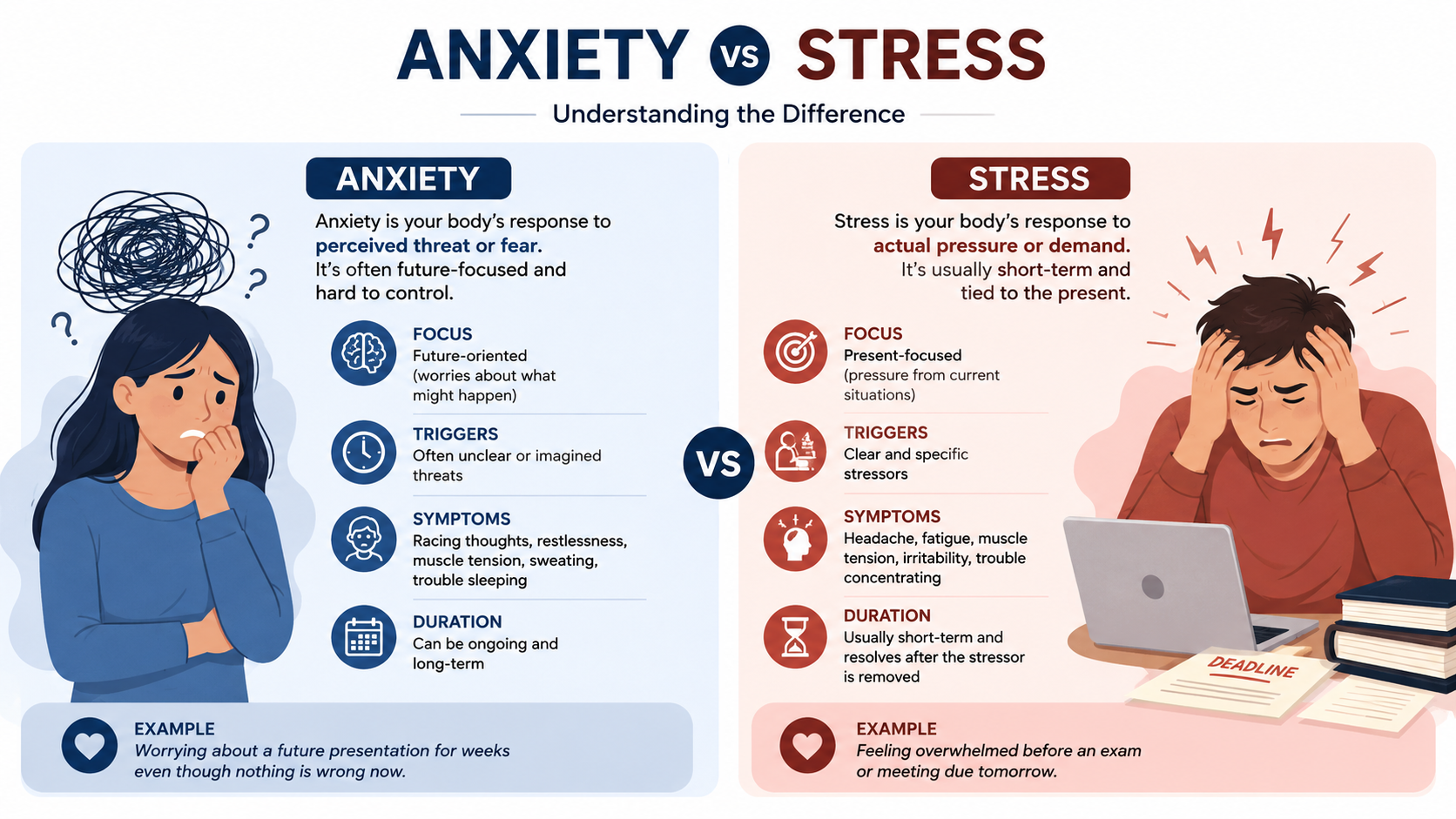
Anxiety and stress are not the same thing. There are differences worth knowing. Some of these are listed below.
Cause - Stress usually has a clear cause which can be identified easily. Anxiety may not have any obvious cause at all. This also increases the difficulty of managing it.
Duration - Stress tends to go away once the situation is resolved. Anxiety stays even after the situation is passed. This is what makes it harder to deal with.
Physical Symptoms - Both show up in the body but not the same way. Anxiety hits harder. Racing heart, dizziness, something feeling physically wrong, that points more toward anxiety. Stress shows up differently. Headaches, tension, uncomfortable, but manageable.
Impact Daily Life - Stress affects the day, but most people still get through their routine. Anxiety is different; it gets in the way of tasks, of relationships, of getting through normal life.
Coping Methods for Stress
Stress is easier to handle when caught early. The longer it is left, the harder it gets.
1. Identify the Cause
Finding what is causing stress is the first step. Once that is clear, dealing with it directly becomes easier. If it is not addressed on time, then it can lead to bigger issues further on.
2. Physical Activity
Regular physical activity helps with stress. Even a short walk every day adds up. It does not have to be intense. Simple movement is enough to make a difference.
3. Talk to Someone
Talking to someone trusted about what is going on makes a difference. Keeping things inside let's stress build quietly and get worse without anyone realizing it.
4. Sleep and Rest
A good sleep routine is also essential to manage stress as it helps your body recover. Getting enough rest every day should not be ignored.
Coping Methods for Anxiety
Anxiety caught early is easier to deal with. Left alone, it builds. And the longer it is left, the harder it gets to bring back down.
1. Breathing Exercises
Slow and deep breathing are two ways to manage anxiety. People usually ignore this but if it is practiced regularly for a longer period of time then it can make a big difference over time.
2. Limit Caffeine and Alcohol
Caffeine and alcohol are also causes that make anxiety worse. People usually consume these without thinking about the impact, but if it continues for a longer period of time then it can lead to issues.
3. Routine and Structure
A daily routine helps with anxiety. It gives the mind something stable to hold on to. As a result, some habits practiced daily may help reduce the feeling of uncertainty that anxiety feeds.
4. Professional Help
Anxiety getting in the way of daily life is a sign to see a doctor. There are ways to manage it that work. Getting help early always works out better than waiting.
When to Visit a Doctor
Early signs of anxiety and stress are easy to ignore, and most people do. But if something feels off and it is not going away on its own, that is when a doctor should be consulted rather than waiting to see if it settles.
When symptoms are not improving despite trying coping methods
When daily tasks and relationships are getting affected
When physical symptoms like racing heart are happening frequently
Consult a doctor after a certain period even if everything seems manageable.
Conclusion
Anxiety and stress are very common today. This can happen to anyone at any time even if everything seems normal from the outside. The best way to avoid such things happening is quite simple.
Mental health needs attention just as much as physical health does. Understanding what is actually going on inside is where it starts. Catching anxiety and stress early makes a real difference to daily life.
FAQs
1. What is the difference between anxiety and stress?
Stress usually has something behind it. A situation, pressure, a deadline. It goes when that goes. Anxiety does not work that way. No clear cause and does not leave easily.
2. Can stress turn into anxiety?
Yes. Stress that is not dealt with does not just stay stressful. It builds. And what it builds into is harder to manage.
3. Are anxiety and stress harmful to health?
Both are, and not just mentally. The body takes a hit too when either one goes too long without being addressed.
4. When should one see a doctor for anxiety or stress?
When weeks have passed and nothing is getting better. When daily life is getting harder to get through. That is not something to keep sitting on.
5. Can anxiety and stress be managed without medication?
A lot of people do it. Routine, movement, breathing, help more than most people expect. Some cases need more. A doctor can help figure out what that is.